
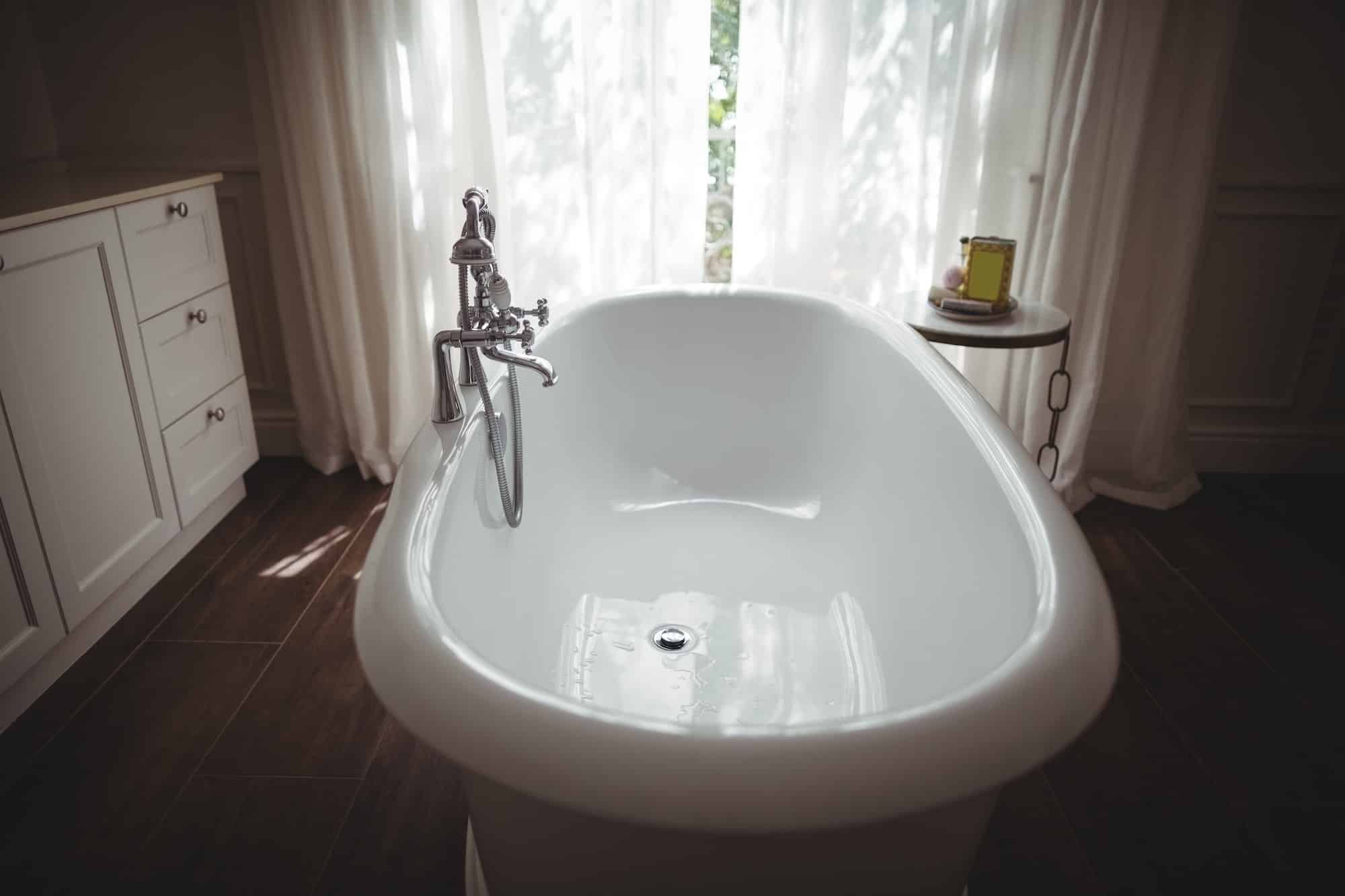
Fiberglass Tub Refinishing
Can you reglaze a fiberglass tub? Yes — with the right prep and primer. Fiberglass tub refinishing (also called reglazing or resurfacing) repairs the worn gelcoat, spider cracks and soft spots and seals the unit under a new glossy coating in about one day.
4.9 / 5.0 Rating
From 500+ reviews
Save up to 75%
vs. replacement
Finished in One Day
use it in 24 hours
2-Year Warranty
on bathtubs and showers
Free Estimates
no obligation
One Day
start to finish
Can you refinish a fiberglass tub? Yes.
Fiberglass tub refinishing — also called reglazing or resurfacing — restores a fiberglass bathtub or tub-shower unit in place. Fiberglass units are molded from resin and glass fiber with a thin colored surface layer called the gelcoat. With daily use, cleaning and UV exposure that gelcoat oxidizes and thins, which is why an older unit looks faded, feels chalky and never comes fully clean. Because the layer is thin, once it is worn there is no polishing it back; it needs a new finish. That is what refinishing provides.
One-piece fiberglass tub-shower units went into most tract homes built from the 1980s through the 2000s, so they fill the Inland Empire, Orange County and Contra Costa, along with apartments and manufactured housing everywhere. They were chosen because they are light and inexpensive. The trade-off is that fiberglass does not age gracefully: it fades, scratches, develops spider cracks and can flex or crack at the floor. Its close cousin, the acrylic tub, wears in similar ways.
The common worry is that a coating will not stick to plastic. It does, when the surface is properly cleaned, deglossed and primed with a bonding primer made for the job. Skipping that prep is why cheap refinishes and DIY kits peel off fiberglass within months. Done right, a refinished fiberglass tub stays glossy for years and carries the same warranty as any bathtub we refinish.
Replacement
- Cut out the unit, open the walls
- Days of construction
- $5,100–$9,900+
Refinishing Best value
- Keep the existing unit
- Finished in a single day
- Just a few hundred dollars
Fiberglass units we refinish:
Ideal for homeowners in 1980s–2000s tract homes, landlords turning over units, and anyone told their fiberglass tub “can’t be reglazed.”
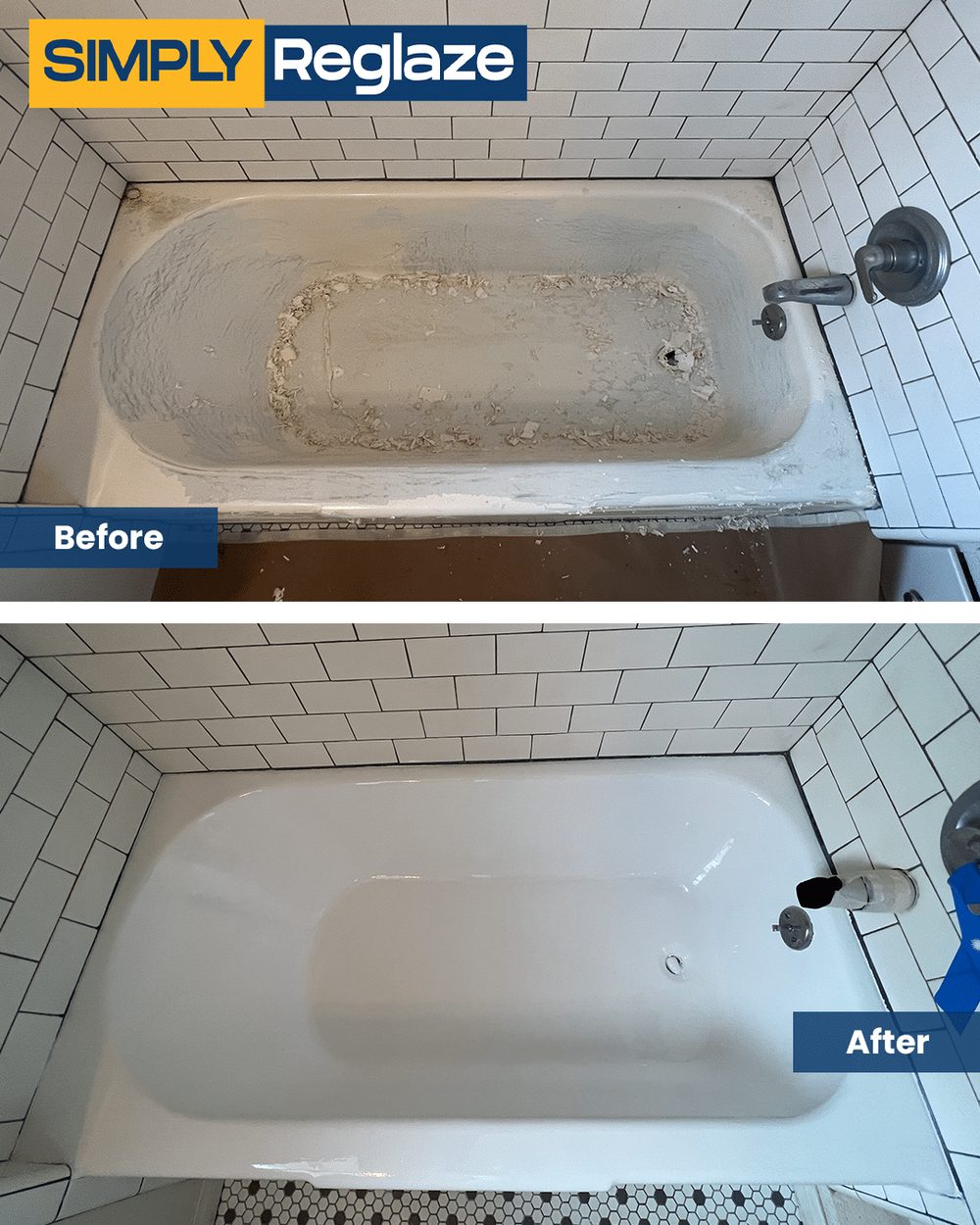
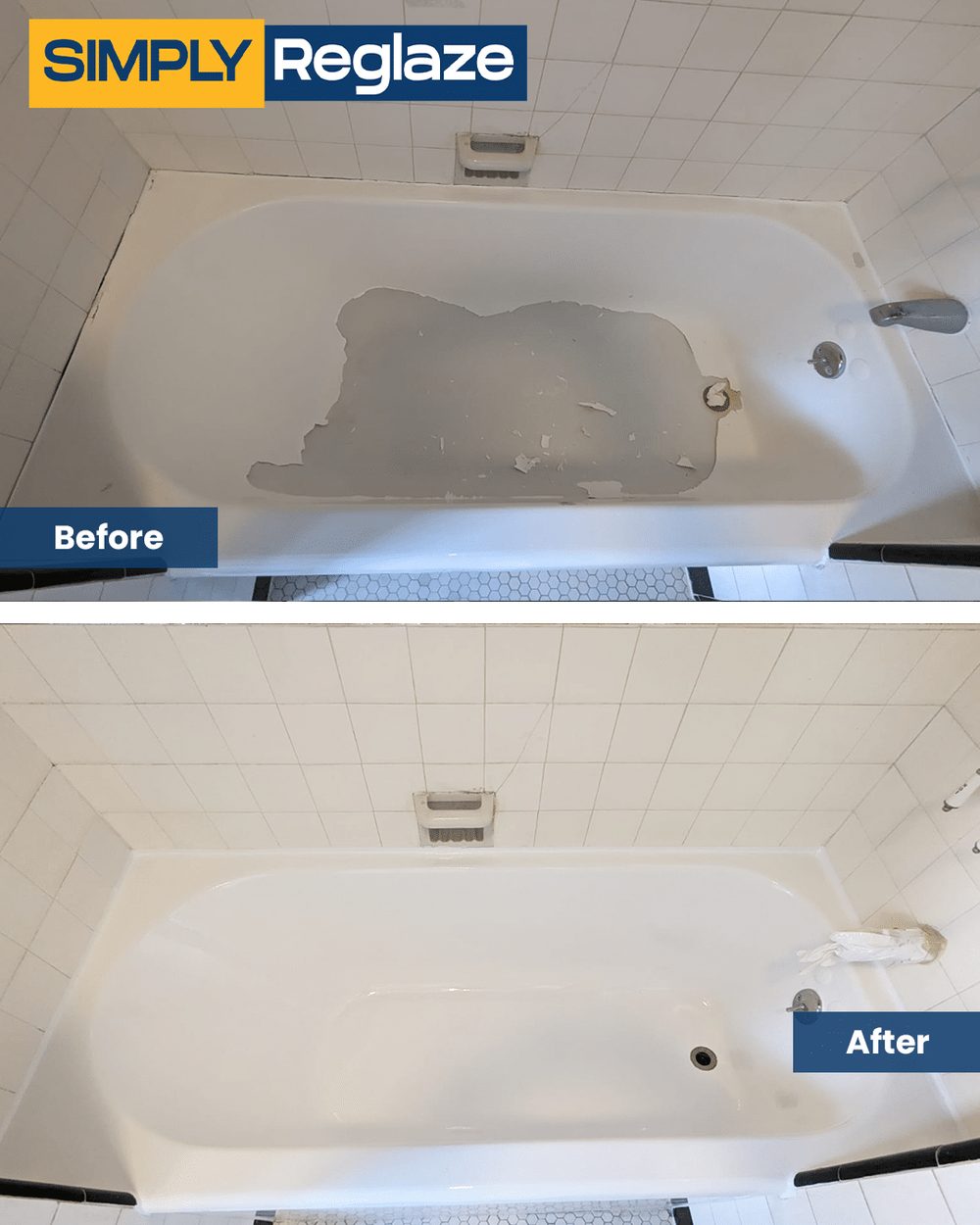
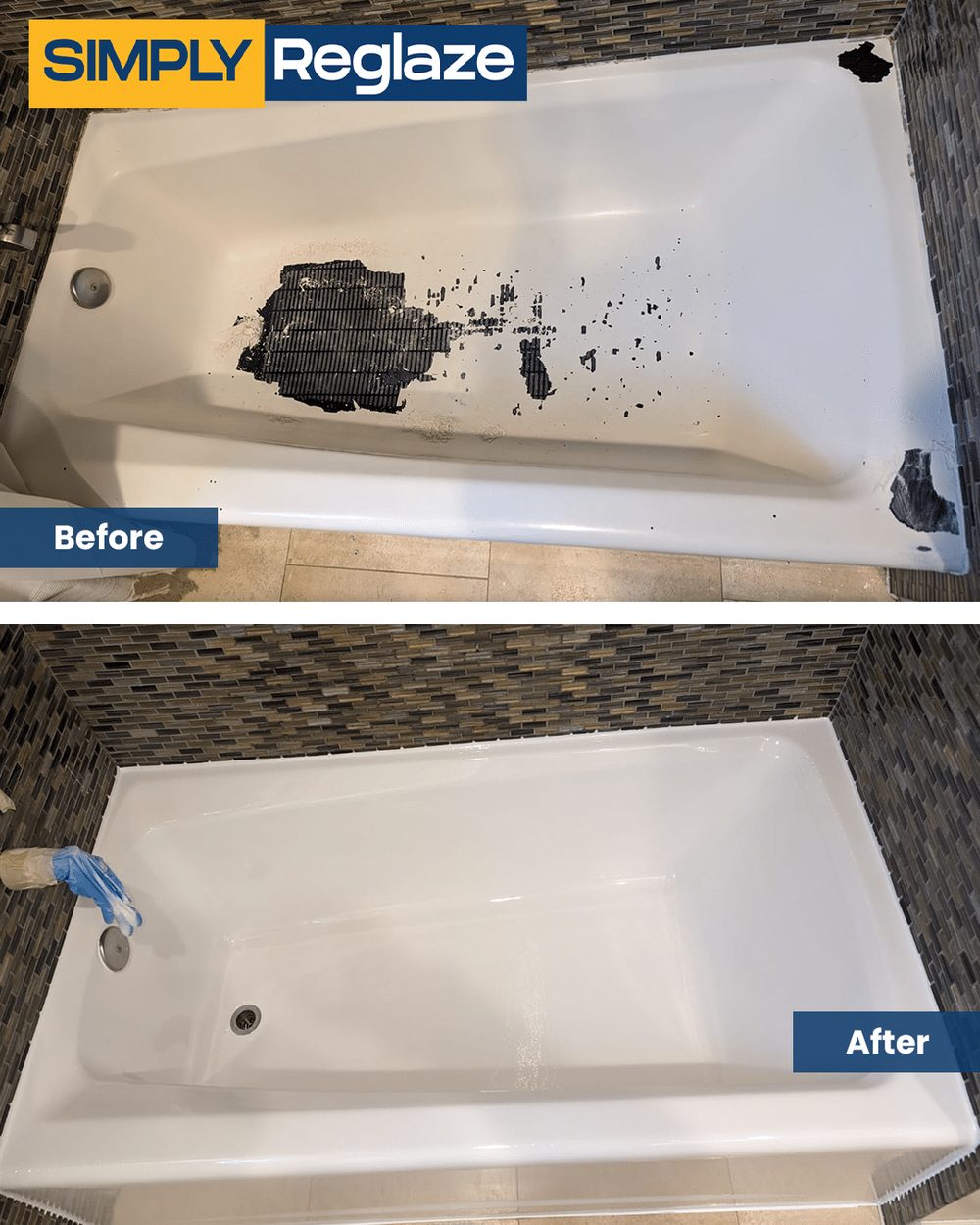
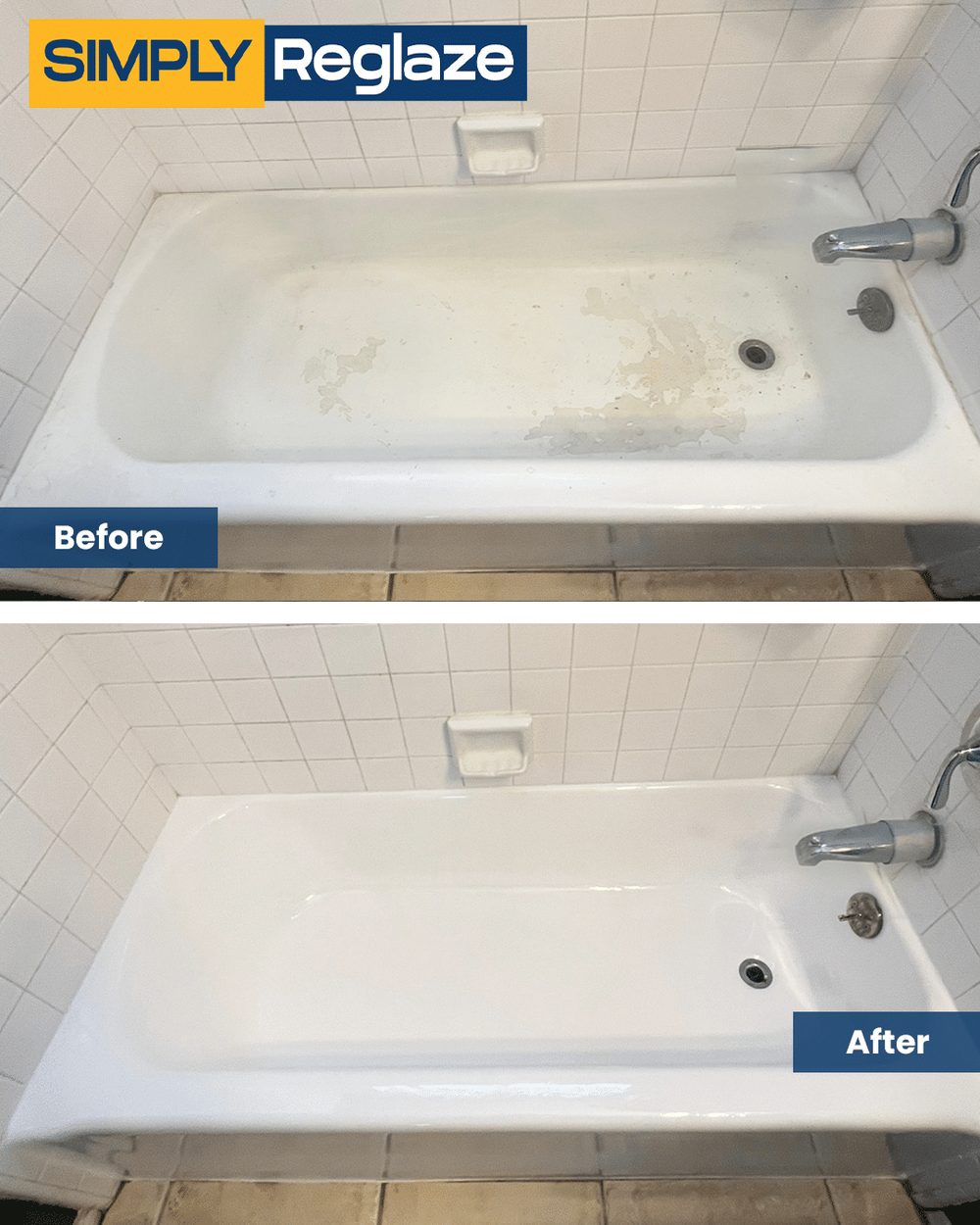
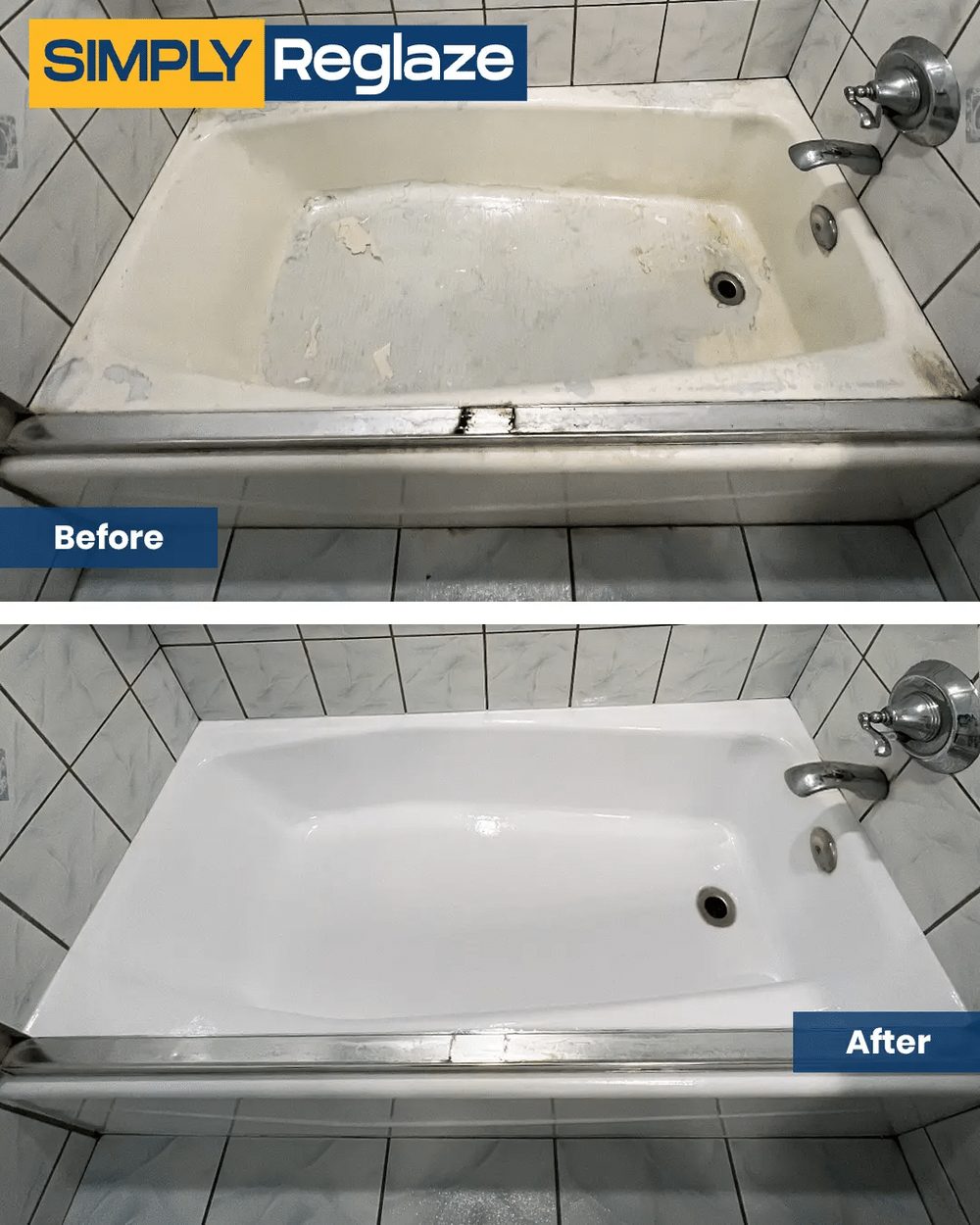
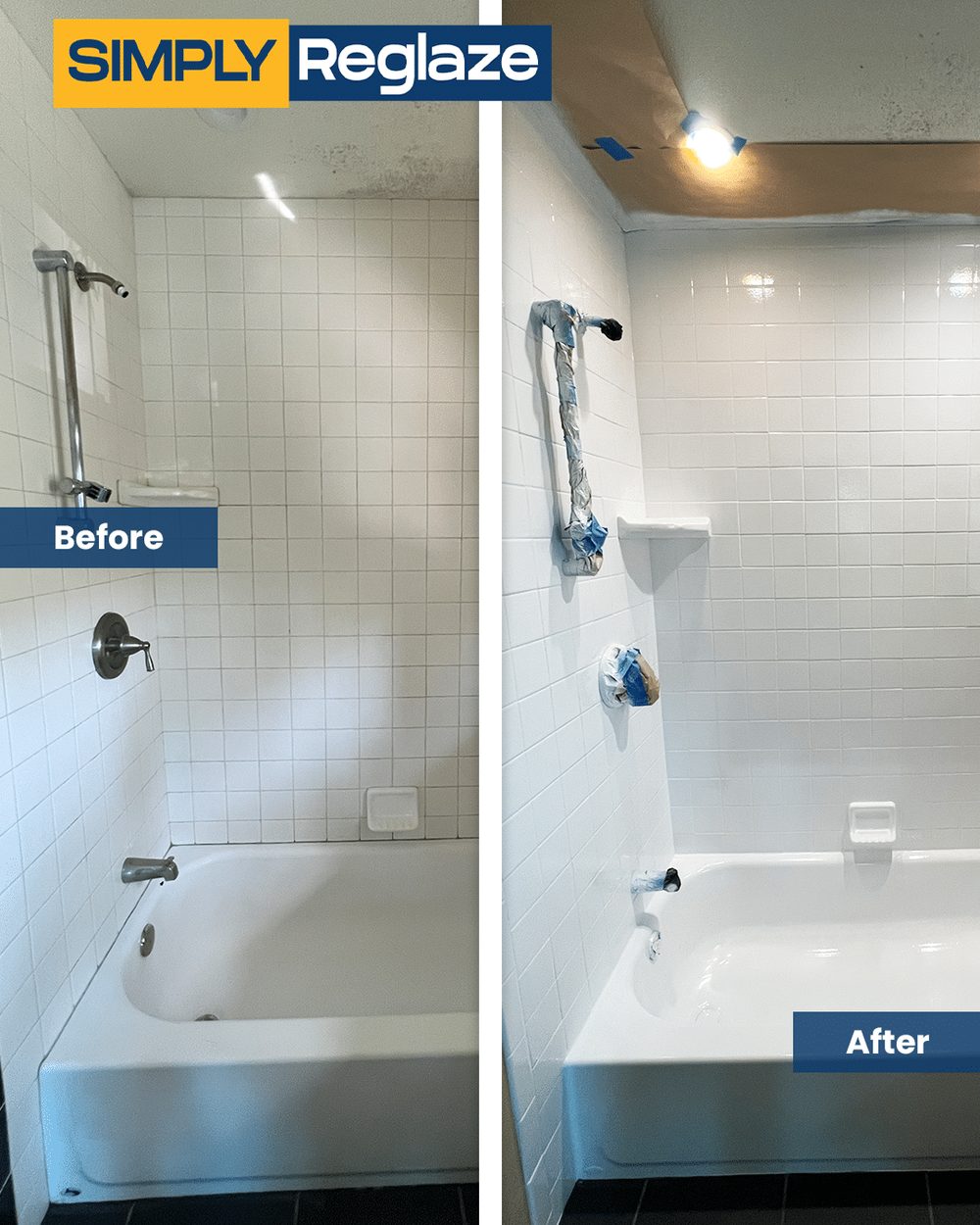
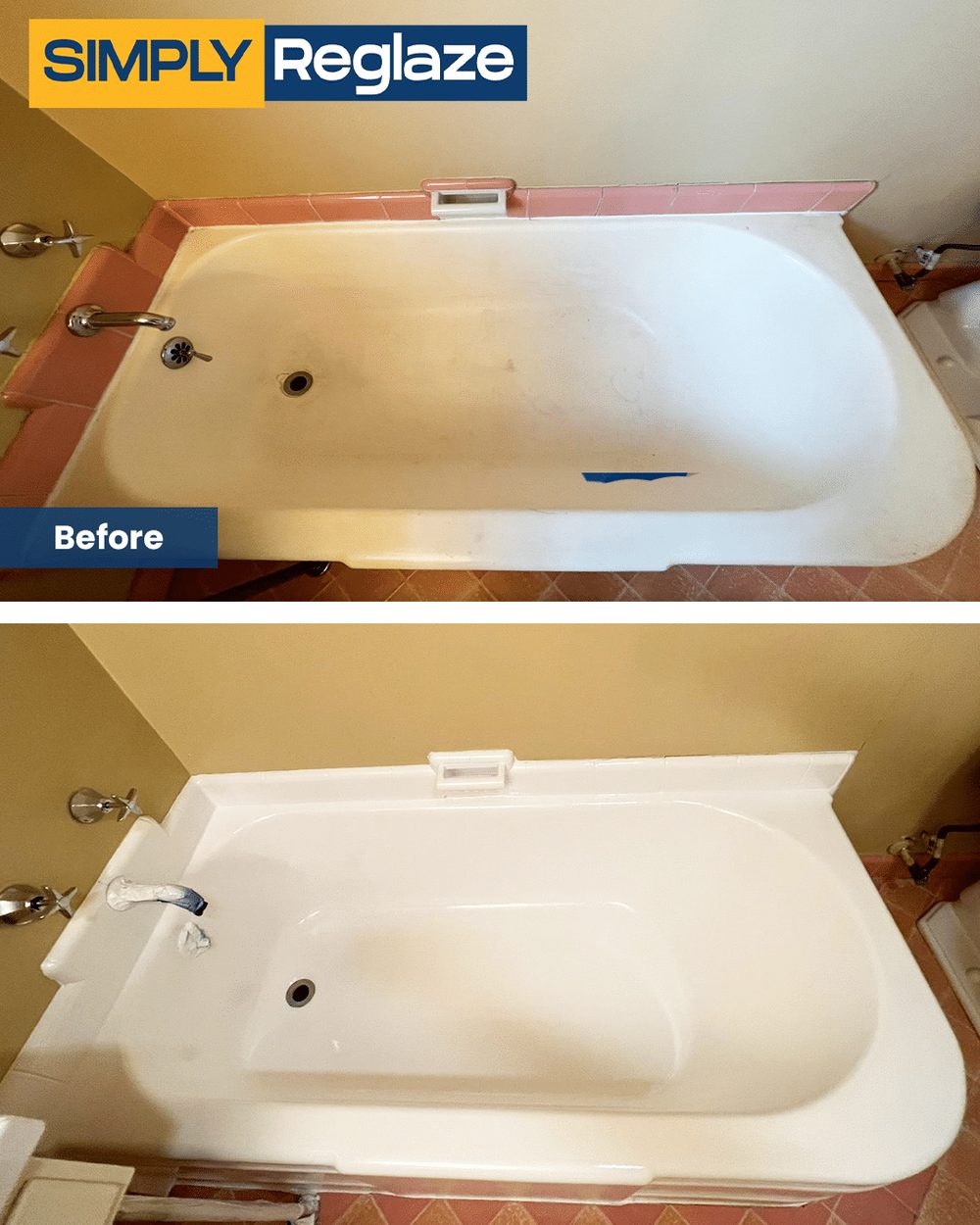
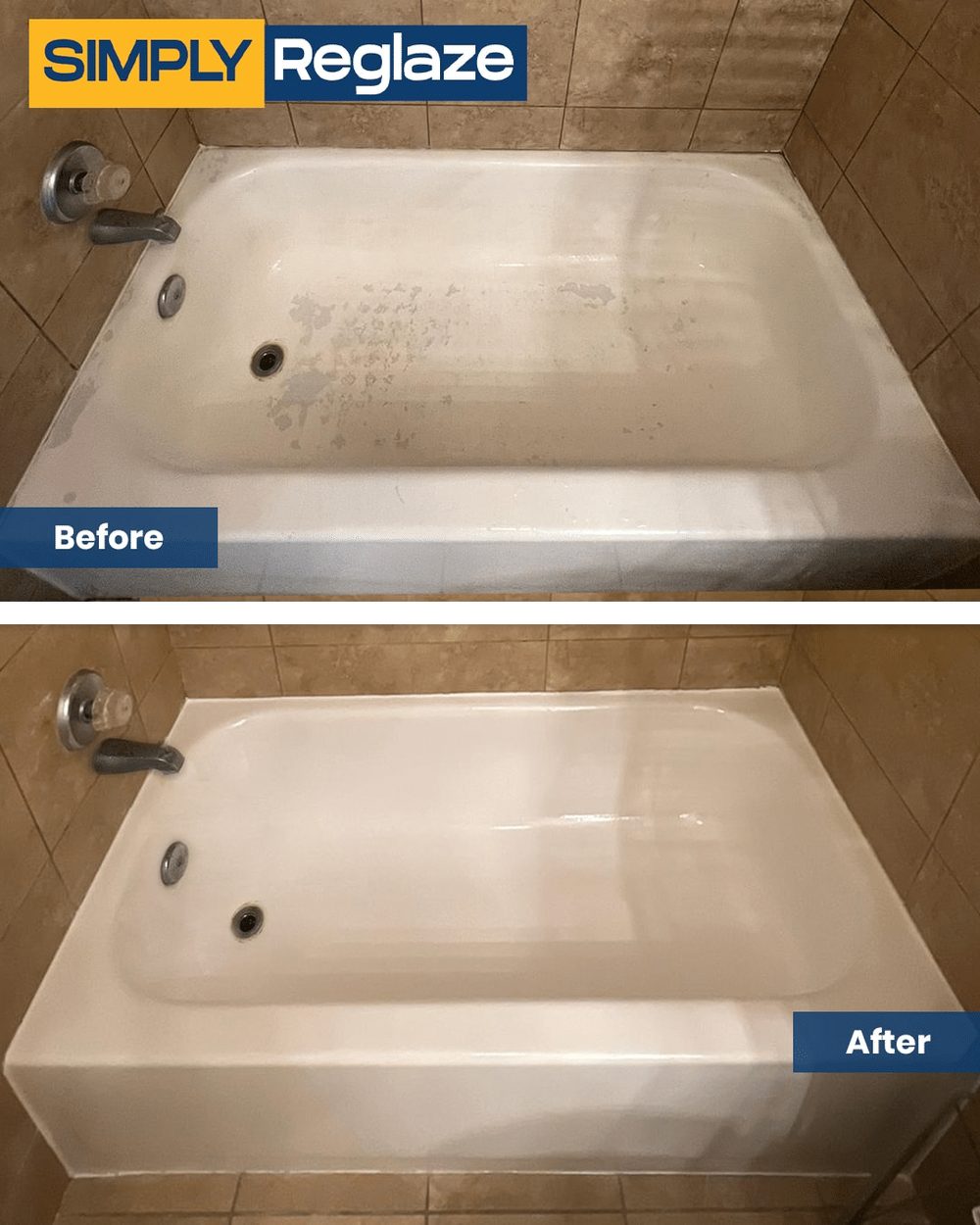
Real fiberglass tub refinishing results
Faded, chalky and cracked fiberglass restored to a bright, high-gloss finish across Southern and Northern California.
Why refinish a fiberglass tub instead of replacing it
The problems come from the thin gelcoat, not the structure underneath, which is exactly what a new coating is designed to fix.
Save up to 75%
A fraction of the $5,100–$9,900+ a replacement runs.
No demolition
Most one-piece units were installed before the walls went up. Removing one means cutting drywall and tile. Refinishing does not.
Chalky gelcoat restored
Oxidized, porous gelcoat that grabs dirt becomes a smooth, non-porous, high-gloss finish.
Spider cracks sealed
Fine networks of hairline cracks are filled and sealed before the new finish goes on.
Soft floors repaired
A spongy floor is reinforced, or fitted with a permanent inlay, so the coating lasts.
Dated colors gone
That almond, blue or bone unit becomes bright white in the same visit.
Ready for a like-new fiberglass tub?
Get a free quote5 Simple Steps to a Like-New Finish
Fiberglass goes through the same five steps as every tub we refinish, with repair and priming tuned to the material.
*Repairing chips, cracks and other damage may carry an additional cost, quoted upfront before we begin.
Inspect & Clean
~30 minWe inspect the fixture and deep-clean the surface to remove soap scum, body oils and residue.
Acid Wash
~20 minAn acid wash strips and opens up the surface so the new coating can bond permanently.
Surface Refinishing
~90 minThe heart of the job, done in three stages. Repair: every chip, crack and worn spot is filled and repaired for a smooth, solid base. Sanding & surface prep: the entire surface is sanded and prepped so the new finish grips and lasts for years. Deep wash: a final deep wash removes every trace of dust and residue so nothing interferes with the coating.
Prime Coating
~30 minA bonding primer is applied as the foundation for a durable, lasting finish.
Reglaze
~60 minMultiple coats of commercial-grade coating are sprayed on for a smooth, glossy, like-new finish.
What is different for fiberglass
Prep is the difference between a finish that lasts years and one that peels. Three things matter most on fiberglass.
Repair before anything else
Spider cracks, stress fractures and soft flexing spots are repaired and reinforced so the surface is solid. Coating over a floor that still moves is the most common reason a cheap refinish fails.
Deglossed, then primed to bond
The surface is cleaned, deglossed and etched with prep suited to fiberglass, then a bonding primer is applied as the foundation. That primer is what lets the topcoat grip plastic the way it grips porcelain.
Seams and the surround together
On a one-piece tub-shower the seams and caulk lines are sealed and re-caulked, and the walls are refinished in the same visit as the tub. See shower refinishing for surround pricing.

Professional Equipment & Techniques
Our technicians use commercial-grade spray systems and premium coatings for a factory-new finish every time.
Fiberglass problems refinishing solves
Fiberglass units develop a few characteristic issues that porcelain tubs never do. Refinishing addresses each of them.
Fading & chalky surface
Oxidized gelcoat looks dull, feels rough and grabs dirt. Restored to a bright, non-porous, high-gloss finish.
Spider cracks & crazing
Hairline crack networks form as the gelcoat ages and flexes. Filled and sealed before coating.
Soft, spongy floors
Moderate flex is reinforced before refinishing; a cracked-through floor gets a permanent inlay.
Cracked shower pans
The floor of a fiberglass shower flexes with every step and often cracks at the center. Repaired and made watertight.
Yellowing & dated colors
Sun-yellowed, almond, bone or blue units from the 80s and 90s changed to bright white.
Leaking seams
Seams and caulk lines on one-piece units sealed and re-caulked as part of the job.
The trusted name in tub refinishing
How much does fiberglass tub refinishing cost?
Most fiberglass tubs cost between $350 and $500 to refinish. A full tub-shower surround done in the same visit is quoted by area; most showers run $400–$900.
Typical fiberglass tub · your exact price depends on:
Minor cracks and worn spots are included. Heavier damage or stripping an old coating carries a $35–$175 repair surcharge, quoted before we begin. Structural floor repairs are a separate cracked tub and inlay repair, priced on inspection.
Request a Free EstimateReglazing vs. Replacement
Replacing a one-piece fiberglass unit is a big job: many were installed before the walls went up, so removal means cutting drywall and tile; the replacement cost guide has the line items. Refinishing restores the same unit in a day with no demolition and is almost always the better value, and better than a liner, which traps water underneath.
Fiberglass tub refinishing across California
Fiberglass tub-showers fill the tract homes of the Inland Empire, Orange County and Contra Costa, and the apartments of every county we serve. Searching for “fiberglass tub refinishing near me”? If you are in Los Angeles, Orange, Riverside, San Bernardino, San Francisco, Marin, Alameda, Contra Costa, San Mateo or Santa Clara county, we are already nearby, usually with next-day appointments.
County guides: Los Angeles · Orange · Alameda · Contra Costa · San Mateo · Santa Clara · San Francisco · Riverside · San Bernardino · Marin
Los Angeles County
Los Angeles · Pasadena · Glendale · Burbank · Santa Monica · Torrance
Orange County
Anaheim · Irvine · Santa Ana · Huntington Beach · Newport Beach
Riverside County
Riverside · Corona · Eastvale · Moreno Valley · Temecula
San Bernardino County
Ontario · Rancho Cucamonga · Chino Hills · Fontana · Redlands
Santa Clara County
San Jose · Santa Clara · Sunnyvale · Mountain View · Palo Alto
Alameda County
Oakland · Fremont · Hayward · Berkeley · Pleasanton
San Francisco County
San Francisco & all neighborhoods
Contra Costa County
Concord · Walnut Creek · Richmond · San Ramon · Antioch
San Mateo County
San Mateo · Redwood City · Daly City · South San Francisco · Menlo Park
Marin County
San Rafael · Novato · Mill Valley · Sausalito · Tiburon
Don’t see your city? Contact us — we likely serve your area.
Fiberglass tub refinishing questions
Yes. Fiberglass tubs and showers are excellent candidates for reglazing. With proper cleaning, deglossing and a bonding primer made for the job, the new coating bonds to fiberglass and stays glossy for years. Most units are finished in a few hours and ready to use the next day.
Usually because they skip the prep. A coating sprayed over fiberglass without proper deglossing and a bonding primer will peel. Done correctly, fiberglass refinishes as reliably as porcelain.
Most fiberglass tubs cost $350–$500. A tub-shower surround refinished in the same visit is quoted by area, with most showers at $400–$900. Heavy damage adds a $35–$175 repair surcharge, quoted before any work starts.
A moderate amount of flex is repaired and reinforced before coating, which firms up the floor and lets the new finish last. If a floor is severely deteriorated or cracked through, it needs a permanent bathtub inlay. A quick look or photo tells us which.
Yes. Spider cracks and crazing form in the thin gelcoat as it ages and flexes. They are filled and sealed before the new finish goes on, so they do not show through or spread.
Both refinish beautifully. Acrylic is a bit harder and more scratch-resistant than fiberglass, but both benefit enormously from a fresh coating once the original surface has faded or worn. The process is essentially the same for each.
Yes. A one-piece fiberglass tub-shower is refinished in a single visit, walls and tub in the same color, and doing both together is cheaper than two appointments.
With proper care, meaning non-abrasive cleaners, no harsh chemicals and no wet mats left on the surface, a refinished fiberglass tub or shower stays glossy for 5–10 years and can be refinished again after that. Every job carries our written 2-year warranty.
Other tubs and surfaces we refinish
Acrylic Tubs
Cast Iron & Clawfoot
Porcelain Tubs
Jacuzzi & Whirlpool

Shower Refinishing

Tile & Wall Refinishing
Bathtub refinishing · All refinishing services · Surfaces we refinish

Ready to restore your fiberglass tub?
Send us a photo of the cracks, chalky surface or soft spot and we will tell you exactly what it needs and quote it before you book, or request a quote online.
Free, no-obligation estimates
Response within 24 hours
Mon–Fri 7AM–5PM · Sat 8AM–12PM


