

Cracked Bathtub Repair — Fixed in Place, No Replacement
A cracked tub does not mean a new tub. Simply Reglaze repairs hairline crazing, stress cracks and through-cracks in fiberglass, acrylic, porcelain and cast iron bathtubs in a single visit, rebuilds flexing floors with a structural inlay, and pairs the repair with refinishing (reglazing or resurfacing) so the crack disappears under one seamless finish.
Fixed in One Day
use it in 24 hours
Root Cause Repaired
not just the crack
Written Warranty
on refinished surfaces
Free Estimates
from a few photos
What kind of crack is it?
Fixing a cracked tub starts with identifying the crack. The three types below look similar from across the room and need three different repairs.
Hairline crazing
A network of very fine surface cracks, often near the drain or on the floor, that you can see but barely feel. Crazing lives in the gelcoat or enamel, not the structure, and is caused by age, harsh cleaners and thermal cycling. It is ground out, filled, sealed and refinished. The least serious crack, and the cheapest to repair.
Stress cracks
A single crack or a short series of them, usually radiating from a point of impact or from a spot that flexes. You can feel the edge with a fingernail. On porcelain and cast iron these follow a dropped object; on fiberglass and acrylic they almost always mean the floor is moving underneath. The crack is filled, but the movement has to be stopped too.
Through-cracks
A crack that goes all the way through the shell. Water leaks through it, the edges move when you press, and on a tub floor it often comes with a soft, hollow feel. This is a structural failure of the floor support, and the fix is a rebuilt base plus a fused inlay panel rather than any surface filler.
Not sure which you have? Press on the crack with your thumb. If it moves or feels soft, it is structural. Send us a photo and we will confirm.
Cracked tub repair by material
The tub material decides both why it cracked and how it is repaired.
Fiberglass and acrylic: flex cracks
Fiberglass and acrylic tubs are thin molded shells. At the factory the floor is supported by a bed of foam or mortar; over years of use that support compresses, shifts or was never fully there, and the floor begins to flex underfoot. Every step bends the shell a little, and eventually the gelcoat or acrylic layer cracks, usually on the floor, at the drain, or along the corner where the floor meets the wall.
This is why filling a crack in a fiberglass tub is a waste of money on its own: the filler is rigid, the floor still moves, and the crack reopens in months. Our repair treats the cause. We inject expanding structural foam beneath the floor to rebuild a solid base, then fuse a rigid, commercial-grade inlay panel over the floor so it cannot flex again. The full procedure is on our bathtub inlay repair page.
Surface crazing and small stress cracks on the walls of a fiberglass unit, where nothing flexes, are simply filled and sealed. Once the tub is solid we refinish it, or the whole tub-shower unit, so the inlay and repairs vanish. See fiberglass tub repair for the other damage these units get, and acrylic tub refinishing for acrylic units.
Porcelain and cast iron: impact cracks and chips
A porcelain tub is a glass-like enamel fused over steel or cast iron. Enamel does not flex, so it does not get stress cracks from movement; it cracks and chips from impact. A dropped bottle, a shower door off its track or a tool leaves a crescent chip or a short crack with the metal showing underneath. On a thin steel tub, the enamel around the drain can also craze and flake where water sits.
The repair is cosmetic but time-sensitive. Exposed steel rusts within weeks, and the rust lifts the surrounding enamel, so the chip grows. We grind the crack or chip to sound material, remove the rust back to bright metal, treat it, fill the area level with a hard two-part compound and refinish. Cast iron is heavy enough that it almost never cracks structurally; a crack that runs into a rusted-through area on thin steel is the rare case that cannot be repaired.
Chips, rust and the porcelain touch-up kits that fail are covered on porcelain tub repair, with full-tub options at porcelain tub refinishing and cast iron & clawfoot refinishing.
The leak risk of a cracked tub
A crack you can see is a path for water you cannot. Bath water and shower spray work into a through-crack every day, and it does not drain away; it soaks the foam under the tub, the subfloor and the framing. The first sign is usually a stain or bubbling paint on the ceiling below, a musty smell, or a floor that feels soft next to the tub. By then the repair bill includes a lot more than the tub.
Cracks also get worse on their own. A hairline becomes a stress crack, a stress crack becomes a through-crack, and the edge of a crack in gelcoat is sharp enough to cut a foot. Fixing a cracked tub early is cheaper, and it is the difference between a one-day repair and a remodel. If you are not sure the tub is worth saving, our guide to the signs your bathtub needs reglazing covers the rest of the checklist.
When a crack cannot be repaired
We repair the large majority of cracked tubs we are sent. These are the ones we turn down, and why:
- The floor has broken through and the walls are cracking too. An inlay rebuilds a floor; it cannot rebuild a whole unit that has separated from its framing.
- The crack runs through the drain fitting. The drain shoe and the enamel or gelcoat immediately around it carry water every day; a repair there rarely holds.
- Steel that has rusted through. A crack that leads into a hole of rust, or rust coming from beneath the tub, means the shell itself is failing.
- The leak is not the crack. Water below the bathroom that comes from the drain, overflow gasket or supply lines is a plumbing repair, and needs to be fixed before we refinish.
For those tubs, read our bathtub replacement cost guide before you commit to anything; it also explains when refinishing is still the better call.
How we fix a cracked tub
One technician, one visit, and a repair that addresses why the tub cracked.
Diagnose the crack
We identify the crack type, press-test the floor for flex, and check the drain, overflow and surrounding enamel or gelcoat. This decides whether the tub needs a fill, an inlay, or both.
Open and clean the crack
The crack is ground out to sound material so the filler has something to grip. Rust on steel is taken back to bright metal and treated; loose gelcoat and old filler are removed.
Stabilize the floor (fiberglass and acrylic)
Where the floor flexes, structural foam is injected beneath it through small sealed relief points and left to cure, so the floor no longer moves. A rigid inlay panel is then fused over the floor with a two-part compound and pressed down from the center out to force out air.
Fill, sand and seal
Crazing, stress cracks and chips are filled with a hard two-part compound, built up in layers if needed, then sanded level with the surrounding surface and sealed.
Refinish and cure
For a seamless result the whole tub is etched, primed and sprayed with a commercial-grade coating. Ready to use in about 24 hours; inlay repairs need 24 hours before a shower and 48 before a bath. Full details on our bathtub refinishing page.
Cracked bathtub repair cost
Crack repair is priced on top of the refinish, and the surcharge is only for damage beyond a standard job.
Quotes come from your photos and any surcharge is agreed before work starts. Our refinishing cost guide lists everything that moves the price, and our bathtub repair page covers chips, rust, holes and every other type of damage.
Cracked tub repair across California
If you are searching for “cracked bathtub repair near me” in Los Angeles, Orange, Riverside, San Bernardino, San Francisco, Marin, Alameda, Contra Costa, San Mateo or Santa Clara County, our technicians are already working nearby, with no travel charge in those metro areas. See every city on our service areas page, or read what customers say on our reviews page.
Cracked bathtub repair questions
Most cracked tubs can be repaired in place. Hairline crazing and surface stress cracks are filled and sealed, and a cracked fiberglass or acrylic floor that flexes is rebuilt with structural foam and a fused inlay. Replacement is only necessary when the tub has broken through, the shell is rusting from underneath, or the crack runs through the drain fitting.
Small cracks are filled as part of a standard refinish, which runs $350–$500 for most tubs. Multiple or deeper cracks, holes or an old coating that has to be stripped add a repair surcharge of $35–$175, quoted before we start. A flexing floor that needs an inlay is quoted on inspection. Replacing the tub instead runs $5,100–$9,900+.
Because the floor is moving. These tubs have a thin shell supported by foam or mortar underneath; when that support breaks down the floor flexes with every step and the surface eventually cracks. Filling the crack alone does not stop the movement, so it cracks again. The permanent fix rebuilds the support and bonds a rigid inlay over the floor.
A crack is not an emergency, but it should not wait. Water that gets through it soaks the subfloor and framing, causes mold and stains the ceiling below, and the crack itself grows and gets sharper. On a steel tub, exposed metal starts to rust within weeks.
A filled crack that is then refinished with the rest of the tub is invisible. A repair-only fill is sealed and color-blended but remains slightly visible as a line of different sheen, which is why most customers have the whole tub refinished over it.
Surface cracks and a full refinish are done in a single visit, and the tub is ready to use about 24 hours later. An inlay floor repair is also finished in one visit; allow 24 hours before showering and 48 hours before a bath.
Yes. Impact cracks and chips in enamel are ground out, the exposed metal is treated for rust, and the area is filled level and refinished. Cast iron almost never cracks structurally; on thin porcelain-on-steel, a crack that runs into a rusted-through area is the exception.
Refinished tubs are covered by our written two-year limited warranty against peeling, blistering and coating separation from workmanship. An inlay is a permanent structural repair. New cracks caused by impact, and rust that returns, are excluded as they are on every refinished surface.
Have a cracked tub?
Text us a photo of the crack for a free, no-obligation quote. Most cracked tubs are repaired in a single visit.
Related repair & refinishing services

Bathtub Repair
Chips, rust, holes and every other repair.

Bathtub Inlay Repair
The permanent fix for a flexing floor.
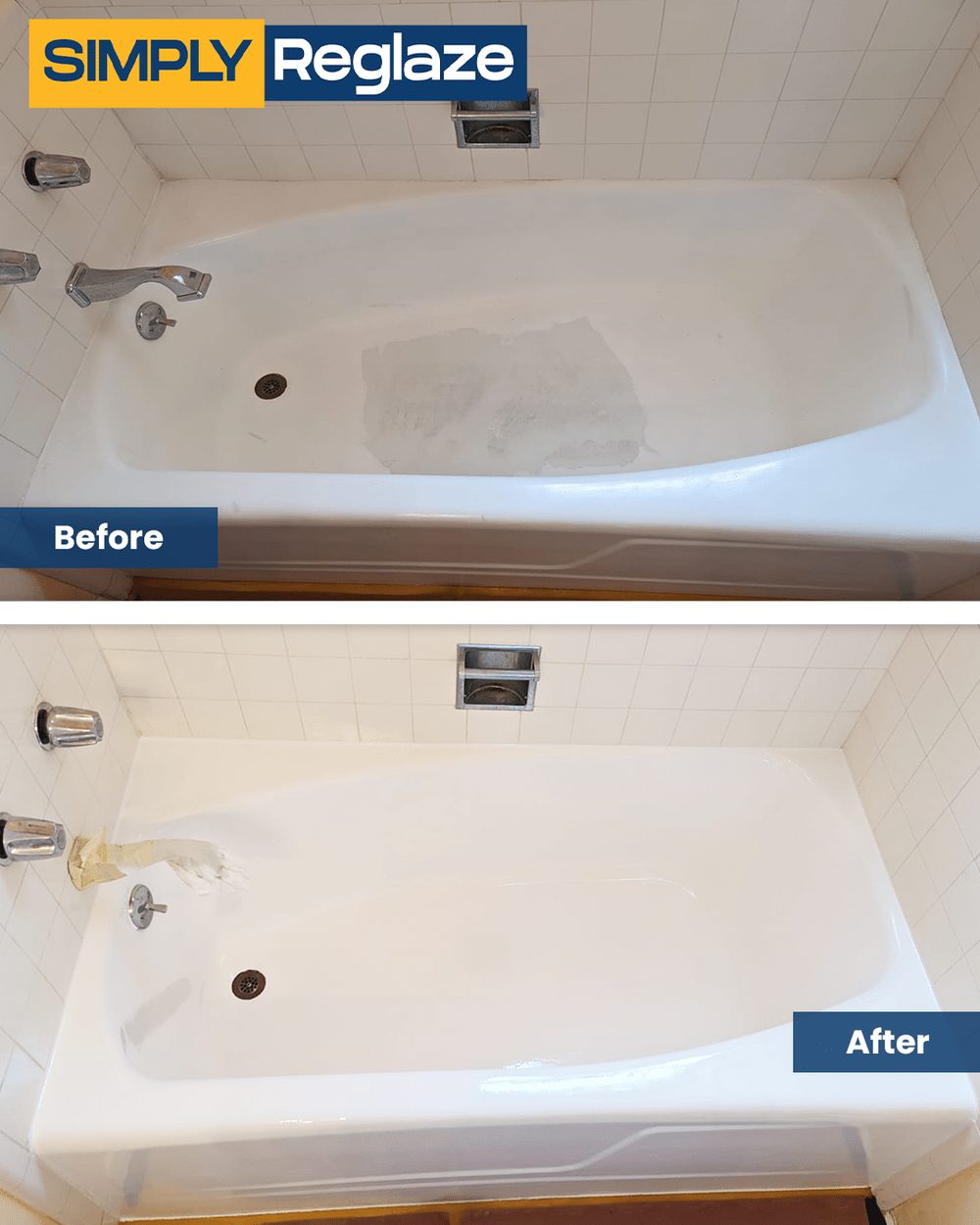
Fiberglass Tub Repair
Spider cracks, soft floors, gelcoat.
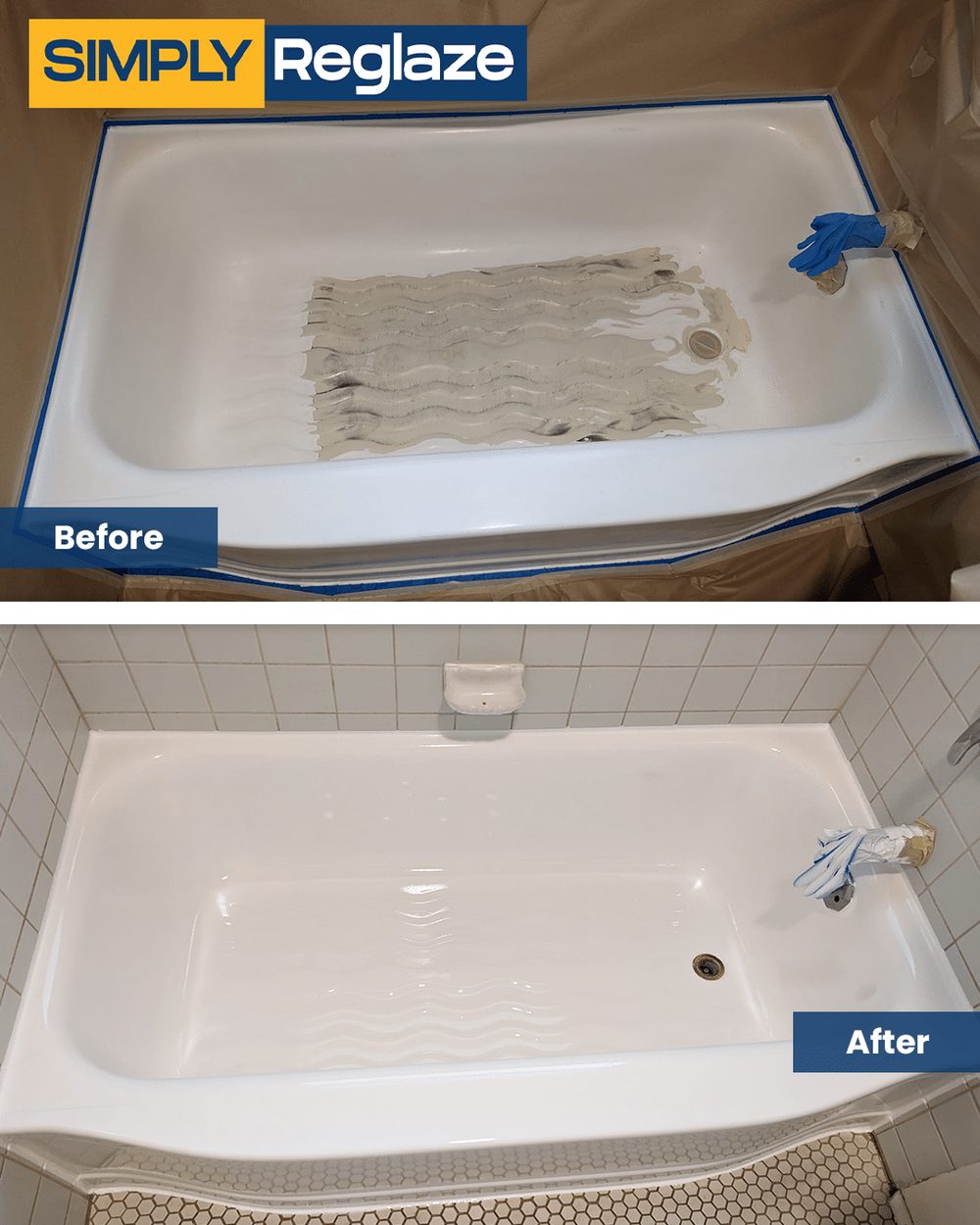
Porcelain Tub Repair
Chips and rust on steel and cast iron.
All refinishing services · Surfaces we refinish · Customer reviews

Ready to fix your cracked tub?
Cracks filled, floors rebuilt and the whole tub refinished in one visit. Send a photo for a free estimate.
Free, no-obligation estimates from photos
Response within 24 hours
Mon–Fri 7AM–5PM · Sat 8AM–12PM
