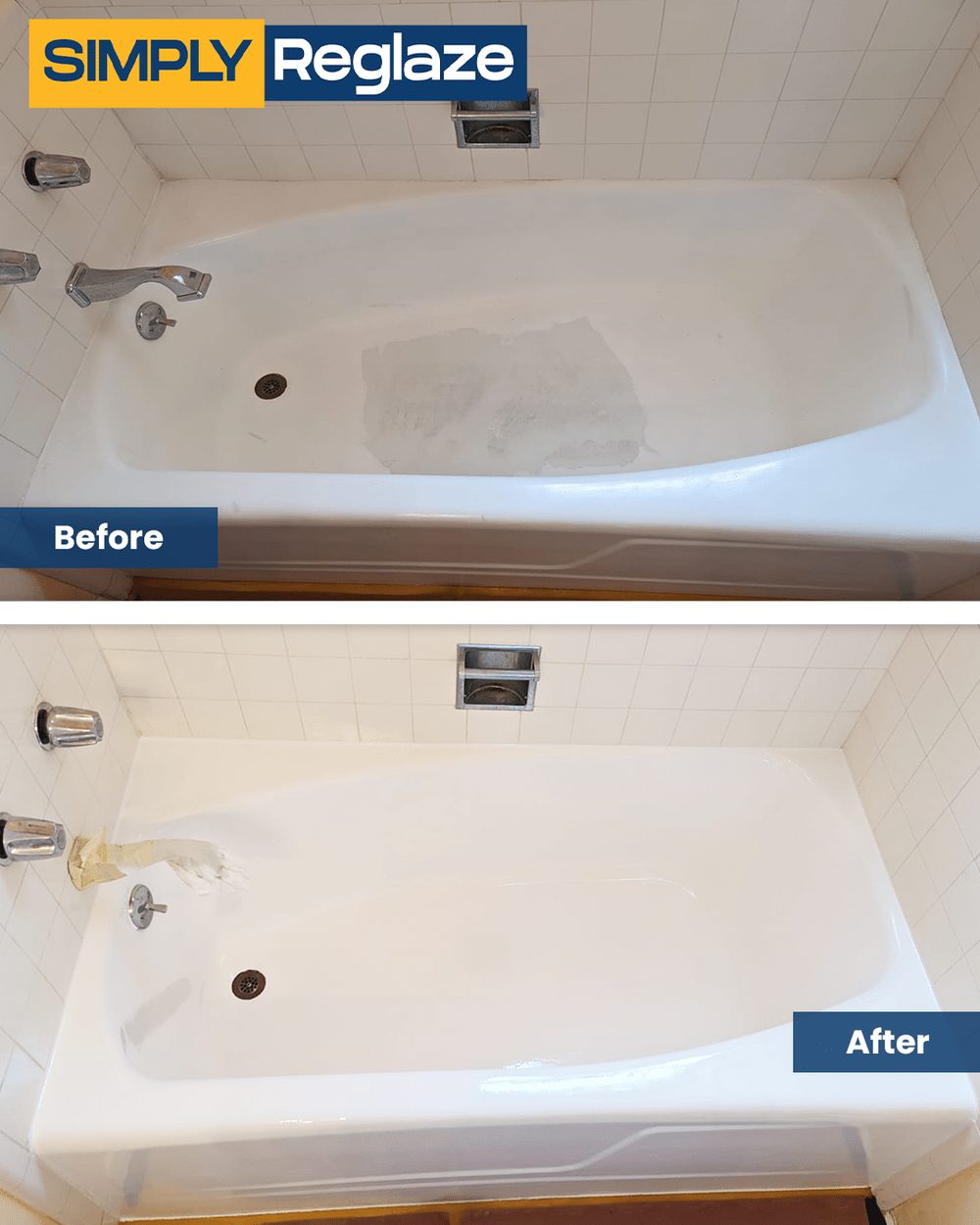

Fiberglass Tub Repair — Cracks, Soft Floors & Holes Fixed in a Day
Fiberglass tubs crack, flex, chip and fade, but very few of them need replacing. Simply Reglaze repairs spider cracks, soft floors, holes, worn gelcoat and drain-area cracks in place, then refinishes the tub (also called reglazing or resurfacing) so the repair disappears under one bright, glossy finish. Most jobs are done in a single visit.
Fixed in One Day
use it in 24 hours
Floors Rebuilt
structural inlay, not a patch
Written Warranty
on refinished surfaces
Free Estimates
from a few photos
Thin shell, thin gelcoat: why fiberglass tubs need repair
A fiberglass tub is a molded shell of resin and glass fiber with a thin colored surface layer, the gelcoat, on top. Builders chose these units for tract homes and apartments from the 1980s onward because they are light and cheap. The trade-off is that the gelcoat wears through, the shell is thin enough to crack, and the floor depends entirely on the foam or mortar that was put under it at installation.
That is why fiberglass tub repair is different from repairing a porcelain tub. On a steel tub the damage is on the surface and the fix is a fill. On fiberglass, the crack is often a symptom of the floor moving, and the repair has to fix the movement first. We do both: rebuild the base where it has failed, repair the surface, then refinish so everything matches. Its close cousin, the acrylic tub, is repaired the same way.
If you have been searching for “fiberglass tub repair near me” anywhere in Los Angeles, Orange, Riverside, San Bernardino, San Francisco, Marin, Alameda, Contra Costa, San Mateo or Santa Clara County, we already work in your area, and a couple of photos is all we need to quote the job.


Fiberglass tub damage we fix
Five problems account for nearly every fiberglass tub we are sent. Here is what causes each one and how it is repaired.
Spider cracks and crazing
Networks of fine cracks that spread out from a point, most often on the floor near the drain or at the corner where floor meets wall. They form as the gelcoat ages and the shell flexes beneath it. Crazing on a wall that does not move is ground out, filled and sealed. Spider cracks on the floor are a warning that the floor is flexing, and we check the support before filling anything.
Soft, spongy or flexing floors
The floor sinks, bends or sounds hollow when you step in. The foam or mortar bed underneath has broken down, or was never fully installed. This is the root cause of most fiberglass floor cracks and no surface repair will hold on it. We inject structural foam to rebuild a solid base, then fuse a rigid inlay panel over the floor. Full details on our bathtub inlay repair page.
Holes and punctures
A dropped tool, a shower door or a rusted drain flange can punch a hole through the shell. The hole is opened to sound material, backed from behind where possible, rebuilt in layers of resin and filler, then sanded fair and sealed. A hole in a flexing floor is treated as a floor failure and gets the inlay.
Worn, chalky gelcoat
The gelcoat oxidizes and thins with cleaning and age until the surface feels rough, looks faded and grabs dirt that will not wash out. There is no polishing it back; once it is worn the tub needs a new finish. The surface is sanded, primed and sprayed with a commercial-grade coating that is smooth, non-porous and glossy again.
Cracks and wear at the drain
Water sits around the drain, the gelcoat wears through first there, and the unsupported ring around the drain flange cracks. Small cracks are filled and sealed; a cracked drain area on a soft floor is stabilized and inlaid. A crack that runs through the drain fitting itself is the one fiberglass repair that rarely holds, and we will tell you if that is what you have.
Faded color and stains
Almond, blue and harvest-gold fiberglass units from the 1980s and 1990s, and white ones that have gone yellow, are restored in bright white or any color as part of the refinish. See fiberglass tub refinishing for the finish itself.
Repair first, then refinish
The order matters more on fiberglass than on any other tub. Coating over a floor that still moves is the most common reason a cheap fiberglass refinish fails.
Inspect and press-test
We check every crack, look at the drain and the corners, and press on the floor to find flex. This tells us what is a surface repair and what is a floor-support failure.
Rebuild the base
Where the floor flexes, expanding structural foam is injected beneath it through small sealed relief points and left to fully cure, so the floor is solid before anything is applied on top.
Repair the surface
Spider cracks, chips and holes are ground to sound material, filled with a hard two-part compound, and sanded level. Where the floor was rebuilt, a rigid inlay panel is fused over it and pressed down from the center out to force out air.
Refinish the tub
The whole tub, or the entire tub-shower unit, is deep-cleaned, sanded and etched so the coating bonds to fiberglass, then primed and sprayed with several coats of commercial-grade finish. The repairs and the inlay disappear under it.
Cure and care
Ready to use in about 24 hours; inlay repairs need 24 hours before a shower and 48 before a bath. Keep abrasive cleaners off the new surface and never leave a wet mat in the tub.
Why fiberglass floors get an inlay, not a patch
A patch is rigid filler in a flexible floor. It holds until the first few hundred steps, then cracks along its edge and lifts. An inlay is the opposite approach: it makes the floor rigid. After the base is rebuilt with structural foam, a commercial-grade panel is chemically fused over the whole floor with a two-part compound. The floor stops moving, the crack underneath is sealed, and the panel becomes the new walking surface. Once refinished, the inlay is invisible; you simply have a solid floor again.
Inlays fit standard fiberglass and acrylic tubs and shower pans, and most repairs are done in a single visit for far less than a new unit. If you are weighing that choice, our bathtub replacement cost guide lays out what a new fiberglass unit actually involves.
When to refinish the whole fiberglass unit
A spot repair on a fiberglass tub is always visible: fresh filler against twenty-year-old gelcoat does not blend. So the honest advice is that once you are repairing a fiberglass tub, you should refinish it. It costs a little more than the repair alone and the whole tub comes back new. Refinish the entire tub-shower unit, walls included, when:
- The gelcoat is chalky, faded or stained across the whole unit, not just at the repair.
- The walls have crazing or spider cracks as well as the floor.
- The unit is a dated color and you want bright white.
- You are turning over a rental and want one appointment, not several.
The finish, the prep it needs on fiberglass and what to expect from it are on our fiberglass tub refinishing page; the general process is on bathtub refinishing.
Fiberglass tub repair cost
Repairs are priced on top of the refinish; the surcharge applies only when the damage is heavier than a standard job.
Quotes come from your photos and any surcharge is agreed before work starts. Everything that moves the price is in our refinishing cost guide; every other kind of tub damage is covered on our bathtub repair page.
Fiberglass tub repair across California
Fiberglass units fill the tract homes of the Inland Empire and Orange County, the apartments of Los Angeles and the East Bay, and manufactured housing everywhere, and our technicians repair them across Los Angeles, Orange, Riverside, San Bernardino, San Francisco, Marin, Alameda, Contra Costa, San Mateo and Santa Clara counties with no travel charge in those metro areas. Check your city on our service areas page, or see what neighbors say on our reviews page.
Fiberglass tub repair questions
Almost always. Spider cracks, worn gelcoat, holes, drain-area cracks and even a soft, cracked floor are all repaired in place. We fill and seal surface damage, rebuild a flexing floor with structural foam and a fused inlay, then refinish the unit. Replacement is only needed when the shell has broken through in several places or separated from the framing.
Minor spider cracks and chips are filled as part of a standard refinish, which runs $350–$500 for most tubs. Holes, multiple cracks or a failed DIY coating that has to be stripped add a repair surcharge of $35–$175, quoted before we start. A soft floor that needs an inlay is quoted on inspection. A new fiberglass unit installed runs $5,100–$9,900+.
The thin fiberglass floor is supposed to sit on a bed of foam or mortar. When that support was never fully installed, or has compressed and broken down over the years, the floor flexes with every step. Left alone it cracks. We inject structural foam to rebuild the base and fuse a rigid inlay over the floor so it never flexes again.
Yes. The hole is opened to sound material, backed from behind where possible, rebuilt in layers of resin and filler, then sanded fair, sealed and refinished with the rest of the tub. A hole in a flexing floor gets the inlay treatment instead of a patch.
Yes. One-piece fiberglass tub-shower units get the same repairs on the floor, and the same crazing and gelcoat wear on the walls. We can refinish the entire unit, walls included, in one visit so the whole surround matches.
Not once the unit is refinished. Repairs and inlays are sanded level and coated with the rest of the tub, so there is no color or texture difference. A repair-only fill without refinishing remains visible as a patch, which is why we recommend doing both.
Surface repairs and a full refinish are completed in a single visit, and the tub is ready to use about 24 hours later. An inlay floor repair is also done in one visit; allow 24 hours before showering and 48 hours before a bath.
The refinished surface carries our written two-year limited warranty against peeling, blistering and coating separation from workmanship. The inlay is a permanent structural repair. New cracks from impact, and damage from suction-cup or wet mats left in the tub, are excluded.
Have a cracked or soft fiberglass tub?
Text us a photo for a free, no-obligation quote. Most fiberglass repairs are finished in a single visit.
Related repair & refinishing services

Bathtub Repair
Chips, rust, holes and every other repair.
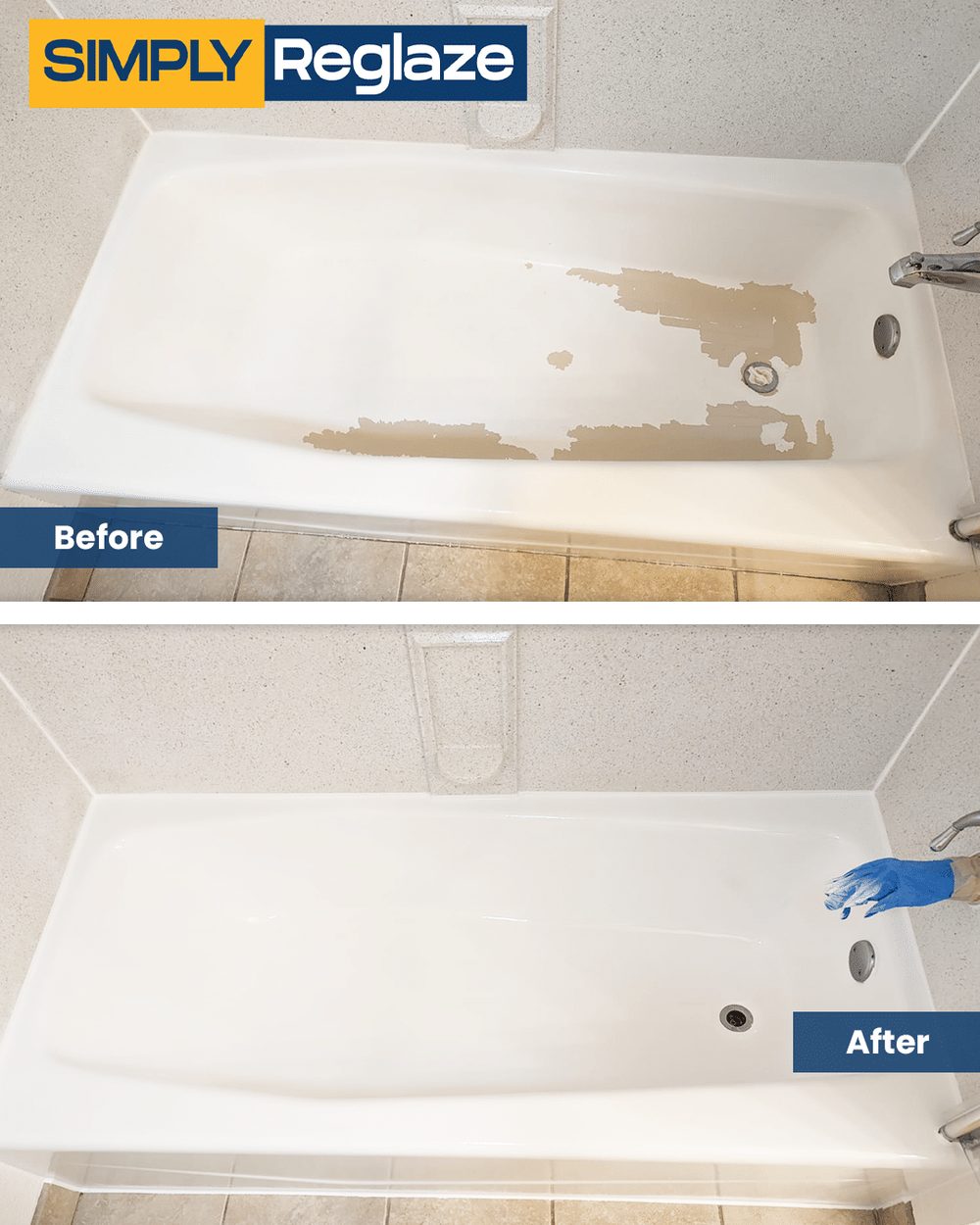
Cracked Bathtub Repair
Hairline, stress and through-cracks.
Bathtub Inlay Repair
The permanent fix for a flexing floor.

Fiberglass Tub Refinishing
The finish that goes over the repair.
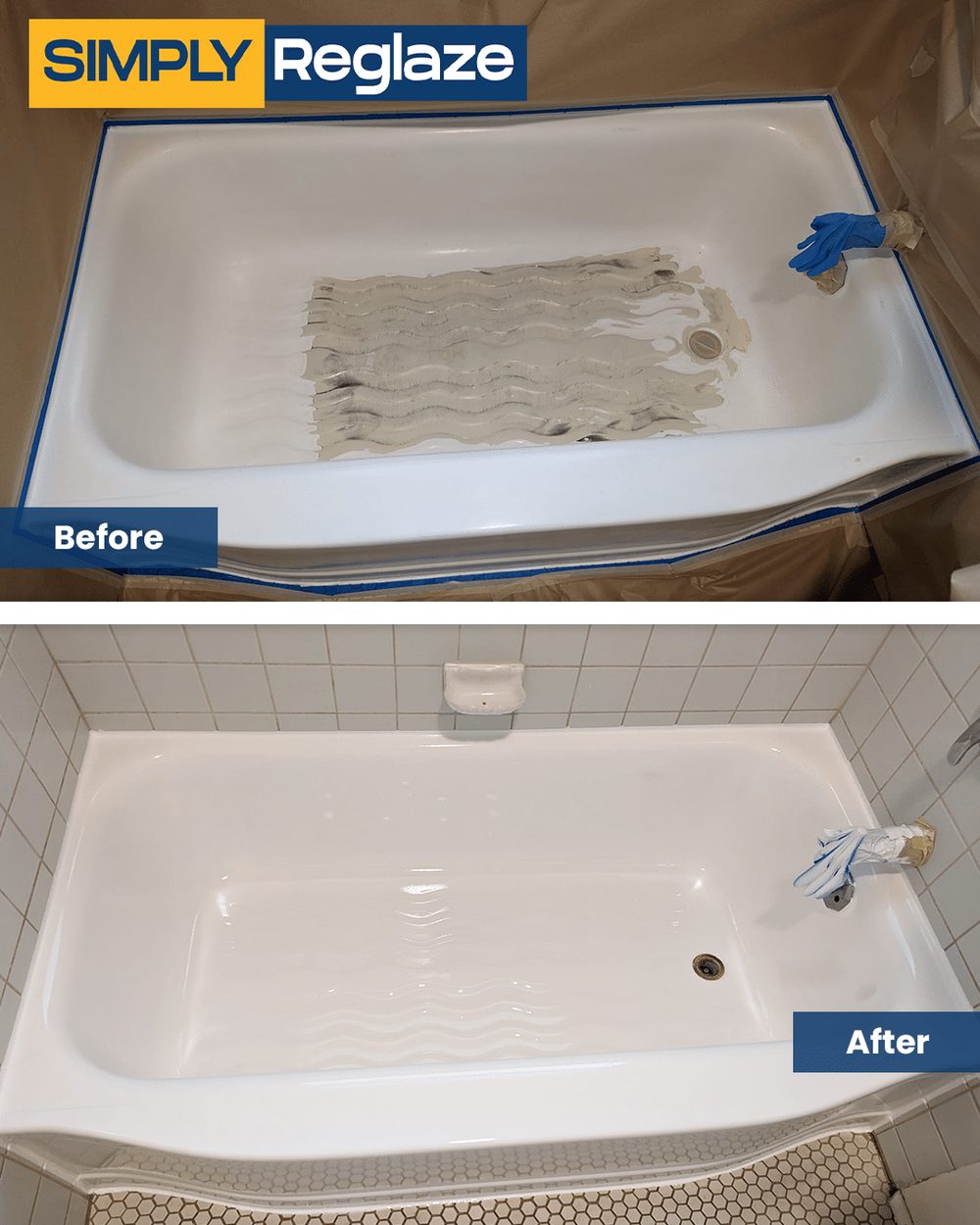
Porcelain Tub Repair
Chips and rust on steel and cast iron.

Slip-Resistant Treatment
Safer footing on a refinished floor.
All refinishing services · Surfaces we refinish · Customer reviews

Ready to repair your fiberglass tub?
Cracks filled, floors rebuilt and the whole unit refinished in one visit. Send a photo for a free estimate.
Free, no-obligation estimates from photos
Response within 24 hours
Mon–Fri 7AM–5PM · Sat 8AM–12PM